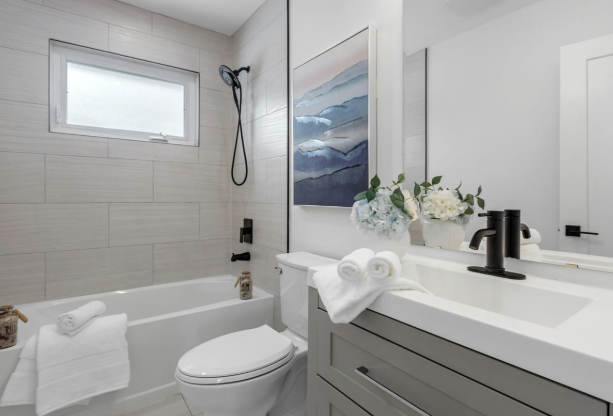

Small bathrooms benefit from smart layouts and restrained finishes. A linear vanity and glass shower widen sightlines, while door swings favor flow. Storage hides in recessed niches, toe-kick drawers, and overlay mirrors to reduce bulk. Soft neutrals, quiet lighting, and subtle mirror glow reflect space without shouting. Privacy comes through frosted windows and consistent hardware. Budget-friendly tweaks can make a noticeable difference, but a careful plan keeps clutter at bay—and momentum toward a more efficient, comfortable bath lingers at the edge of consideration.
Make a Small Bath Feel Bigger With Clever Layouts
Smart layouts can make a compact bathroom appear larger by guiding sightlines and optimizing every square foot. A well-placed door swing, a linear vanity, and a glass shower minimize visual clutter while reflecting light. The double vanity concentrates utilities, freeing floor space. Clear zones reduce snag points, enabling movement. Strategic fixtures create openness without sacrificing function or style.
Maximize Storage Without Clutter
Fresh storage solutions can extend the effectiveness of a small bathroom without adding visual clutter. The approach centers on smart storage, hidden compartments, and deliberate placement.
Cabinets with shallow depths, recessed niches, and toe-kick drawers maximize space without bulk.
Overlay mirrors conceal slim shelves, while magnetic strips organize metals.
Clear labeling, uniform hardware, and selective freestanding units preserve ease of use and freedom.
Light Up Privacy: Mirrors, Windows, and Color
Light can transform a compact bathroom, but privacy must guide that illumination. Mirrors reflect intent; mirror lighting should be subtle yet adequate, avoiding glare while enlarging the space.
Windows demand discreet treatment for window privacy through frosted or textured panes and strategic placement.
Color choices should calm and clarify: soft neutrals, cool whites, and restrained accents enhance contrast without shouting.
Budget-Friendly Upgrades That Make a Difference
With careful choices, small bathroom upgrades can yield noticeable impact without draining the budget. The approach emphasizes budget options that deliver big visual shifts without heavy construction. Practical selections include high-impact finishes, efficient hardware, and smart storage. Quick upgrades can transform space: refreshed lighting, vent covers, and mirrors. These choices balance aesthetics with function, offering freedom to personalize without overspending, reaping immediate, enduring payoff.
Frequently Asked Questions
How Do I Choose a Toilet With a Small Footprint?
A compact toilet with a small footprint typically features a short bowl and streamlined tank; look for models labeled as compact or space-saving. Consider toilet dimensions and footprint reduction; prioritize rear or side clearance for comfortable access.
What’s the Best Shower Door for Tiny Baths?
Sliding like a whisper, the best shower door for tiny baths combines clear panels and minimal frames; it reduces visual bulk. It compares shower door options for tiny bath efficiency, balancing space, durability, and easy cleaning for freedom-loving audiences.
See also: How Artificial Intelligence Is Revolutionizing Business Processes
Which Vanity Height Saves Bathroom Space Best?
A lower vanity height best saves space, enabling comfortable movement while maximizing toe-kick storage; space saving vanities emphasize compact dimensions with integrated accessories. This approach balances function and form, offering freedom through streamlined design and accessible, efficient use of vertical space.
How Can I Vent Moisture in Tiny Bathrooms?
Ventilation, moisture management, and thoughtful design cooperate to vent moisture in tiny bathrooms. Acknowledging constraints, one might install a quiet exhaust fan, consider inline ducts, and add a humidity-sensing switch—these ventilation strategies stabilize air quality and comfort.
Are Multi-Use Towels Worth It in Small Spaces?
Multi use towels can be worth it, especially in tight bathrooms. They consolidate textiles, freeing counter space; however, durability varies. For freedom-loving users, prioritize space saving textiles with quick-dry fabric and sturdy stitching to ensure long-term versatility.
Conclusion
A small bathroom can feel dramatically larger with smart layout and low-profile storage. By choosing a linear vanity, glass shower, and recessed niches, sightlines stay open and clutter stays invisible. Strategic lighting and mirrored surfaces multiply brightness, while frosted privacy windows preserve calm. Budget-friendly tweaks—toe-kick drawers, overlay mirrors, uniform hardware—deliver big impact without bulk. In the end, thoughtful design turns restricted space into a surprisingly generous retreat, a tiny room that feels like a mansion—almost, embarrassingly, spacious.